

There is something deeply satisfying about knitting your own socks. They are one of the most rewarding projects in all of knitting: small enough to finish, complex enough to learn from, and personal enough that you will never want to go back to store-bought. Whether you have been curious about sock knitting patterns for a while or you are ready to cast on your very first pair, this guide covers everything you need to know.
Sock knitting is thriving right now. There are over 42,000 sock knitting patterns on Ravelry alone. Dedicated events like Socktober and Sock Madness (now in its 20th year). The most-knit sock pattern on Ravelry has over 45,000 completed projects. And with so many construction methods, yarn weights, and styles to explore, there is always something new to try.
Key Takeaways: Knitting Socks
- Sock knitting is one of the most popular project categories in knitting, with 42,000+ patterns on Ravelry and dedicated annual events
- Fingering weight (4-ply) is the standard yarn weight for socks, but DK and worsted weight are excellent for beginners and cozy house socks
- A 75/25 superwash wool/nylon blend is the gold standard for sock yarn, combining softness with durability
- Top-down (cuff-down) with a heel flap and gusset is the most recommended construction for first-time sock knitters
- Textured socks with cables, ribbing, and slip-stitch patterns are the biggest design trend for 2026
- House socks and cozy slipper socks in heavier yarn weights are fast, satisfying projects and the most popular gift knits
- The German short row heel is one of the easiest heel techniques and a great option for beginners
Why Knit Your Own Socks?
If you have never knit socks before, you might wonder why so many knitters are passionate about them. Here is why sock knitting has such a devoted following.
They are the perfect portable project. A sock in progress fits in your bag, your purse, even a large coat pocket. They travel beautifully. Many knitters keep a sock project going at all times as their "commute knitting" or "waiting room knitting."
They teach you almost everything. Knitting a pair of socks takes you through knitting in the round, shaping (increases and decreases), short rows, picking up stitches, and grafting. By the time you finish one pair, you have leveled up your skills significantly.
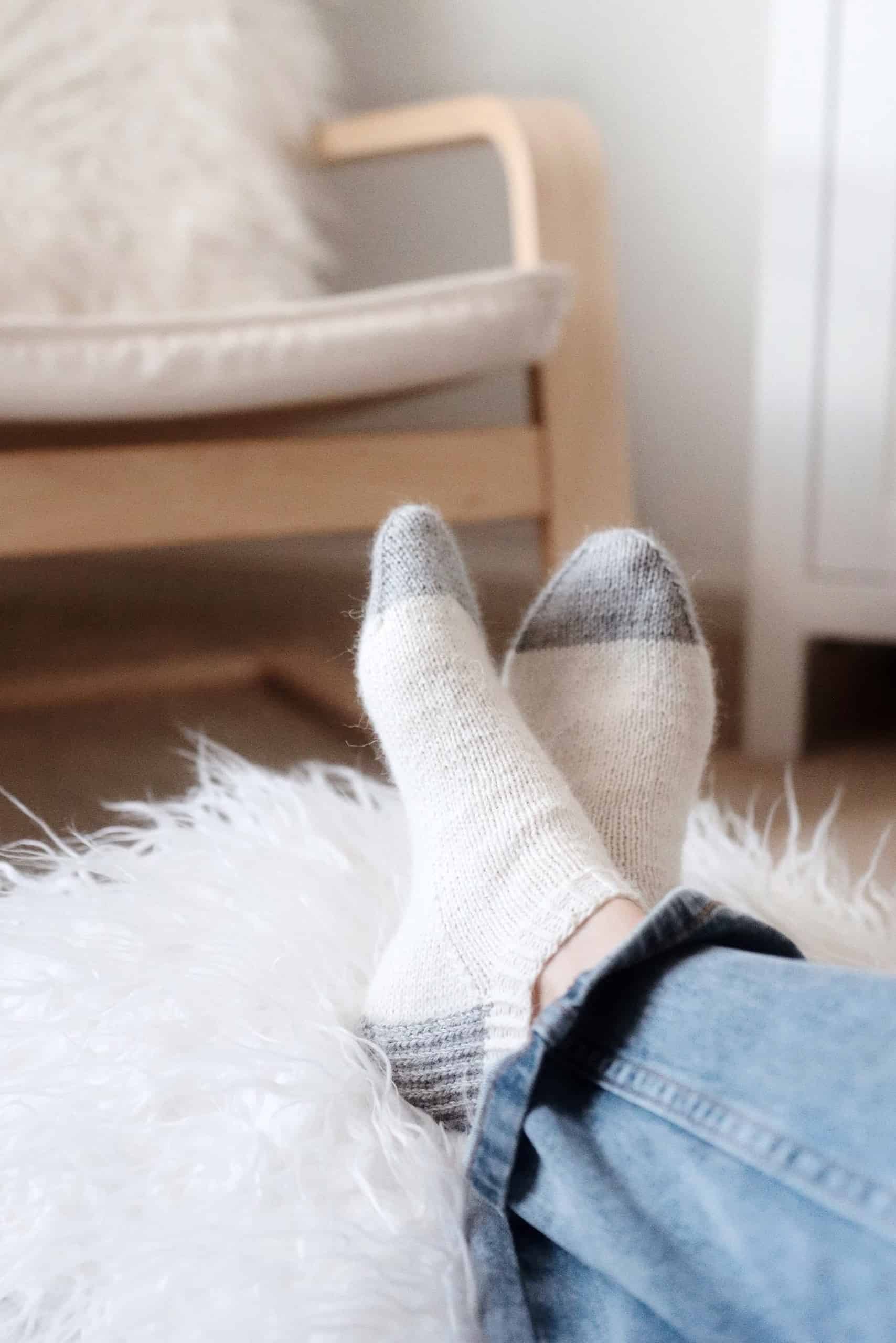
Handknit socks feel incredible. There is simply no comparison between a pair of socks knit in quality merino/nylon blend and anything you can buy at a store. The fit, the warmth, the softness. Once you wear handknit socks, it is hard to go back.
They are endlessly customizable. Choose your yarn, your colors, your stitch pattern, your heel style. Every pair can be different. That variety is what keeps sock knitters coming back for pair after pair after pair.
Sock Construction Methods: How Socks Are Knit
Understanding sock construction is the first step in choosing the right knitting pattern for your skill level. There are two main approaches, and each has its advantages.
Top-Down (Cuff-Down)
You start at the cuff, work down the leg, turn the heel, knit the foot, and close the toe. This is the most traditional method and the one most commonly recommended for beginners. The heel flap and gusset construction is well-documented with decades of tutorials and support.
Advantages: the most resources and tutorials available, easy to try on as you go, forgiving fit, and the heel flap creates extra reinforcement right where you need it.
Toe-Up
You start at the toe and work up toward the cuff. This method has grown significantly in popularity and is the standard in most European countries. The biggest advantage is that you can knit until you run out of yarn, which is perfect when working with a single skein.
Advantages: use every last yard of yarn, try on the foot as you go, no grafting at the toe (you use a simple cast-on instead).
Needles: DPNs, Magic Loop, or 9-Inch Circulars?
Double-pointed needles (DPNs) are the traditional choice. You distribute stitches across 4 needles and knit with a 5th. They look intimidating but become second nature quickly.
Magic Loop uses a single long circular needle (32 inches or longer) to knit small circumferences. Many modern sock designers write patterns for Magic Loop, and it is the go-to method for knitting two socks at a time.
9-inch circular needles are a newer option that some knitters love. The small circumference matches the sock perfectly. However, many knitters find them uncomfortable because of the short needle tips.
There is no wrong answer. Try what appeals to you. ChiaoGoo TWIST interchangeable sets are excellent for Magic Loop sock knitting because the cables are flexible and the joins are smooth.
Best Yarn for Knitting Socks
Sock yarn is a category of its own in the knitting world, and choosing the right one makes a real difference in how your socks feel and how long they last.
Yarn Weight
Fingering weight (4-ply) is the standard for sock knitting. It creates a thin, dense fabric with excellent stitch definition. Most sock patterns and most dedicated sock yarns are fingering weight. Knit Picks Stroll Sock Yarn is a reliable, affordable option in a huge range of colors.
DK weight is increasingly popular for socks, especially for beginners and for cozy house socks. The thicker yarn knits up faster and is less intimidating for first-timers. Several well-known sock designers (Winwick Mum, Crazy Sock Lady) offer popular DK weight sock patterns.
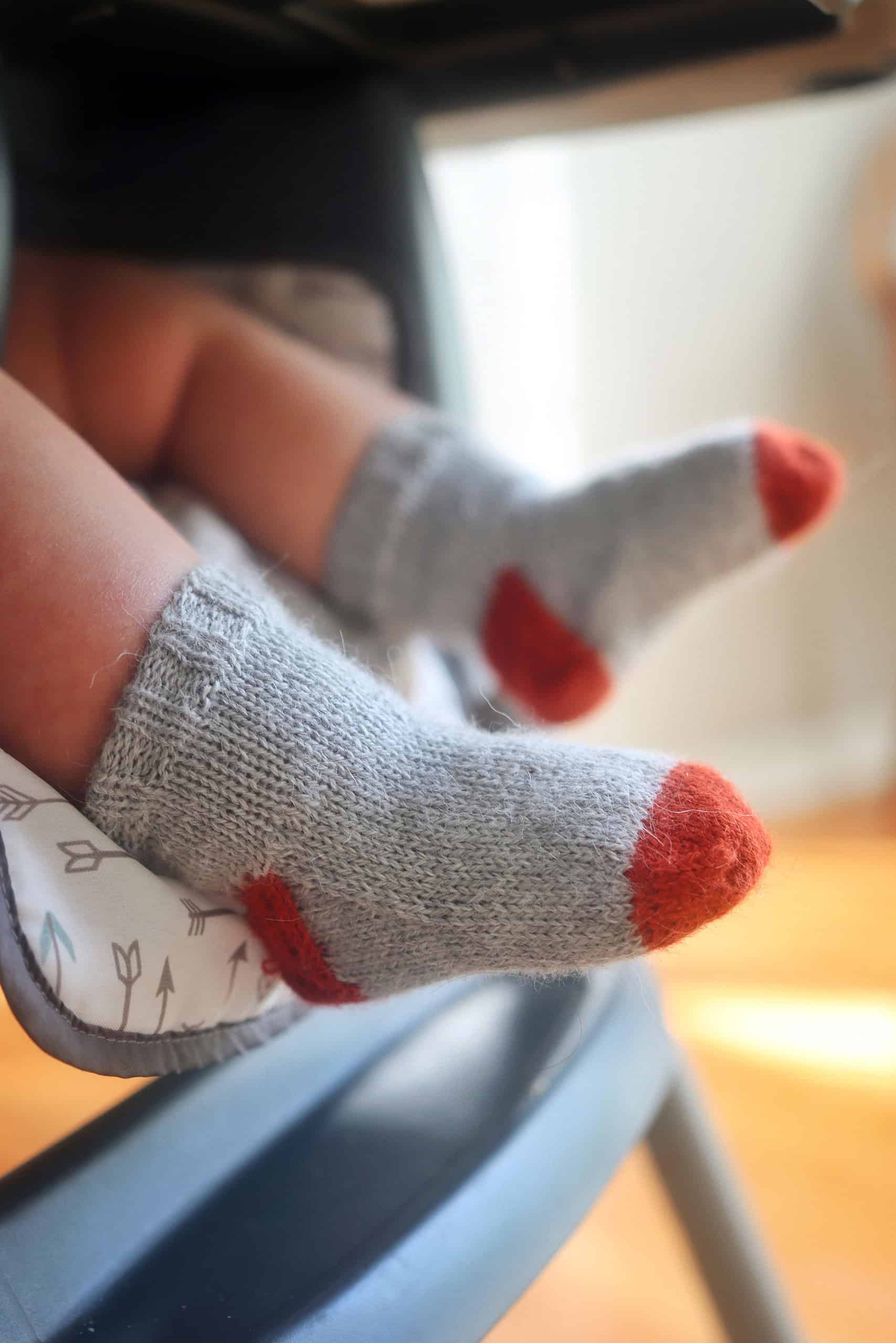
Worsted and chunky weight are great for house socks, slipper socks, and boot socks. They knit up very quickly and create thick, warm socks perfect for lounging. My Cuddle Socks Pattern is designed in this cozy spirit.
Fiber Content
75/25 superwash merino/nylon is the gold standard for sock yarn. The merino provides softness and warmth. The nylon (at least 20-25%) provides durability and helps the socks hold their shape through wear and washing. This blend is machine washable, which is essential for socks.
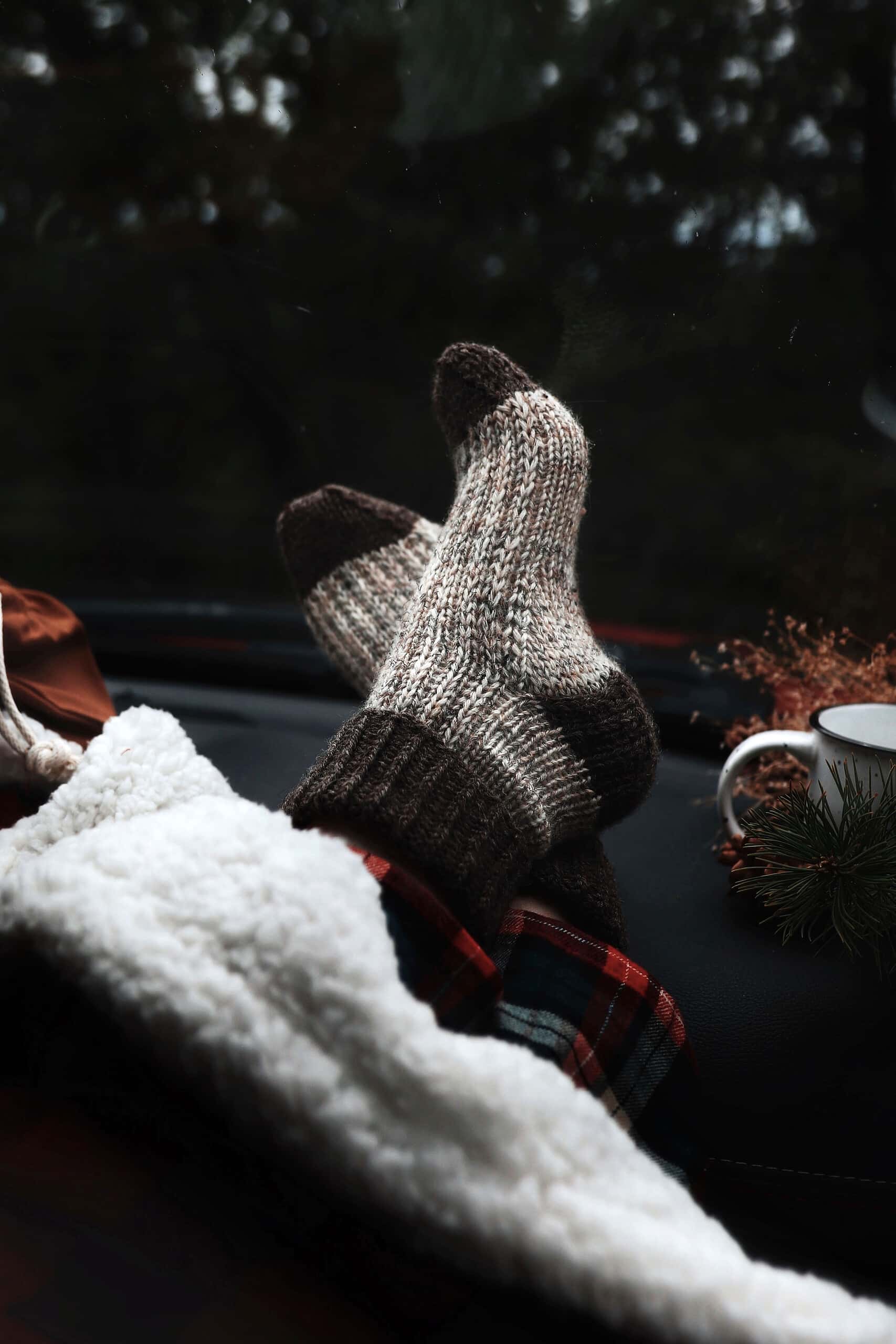
Self-striping and hand-dyed yarns are hugely popular in the sock knitting world. Self-striping yarn creates automatic color patterns as you knit, turning a simple stockinette sock into a colorful finished object with zero extra effort. Hand-dyed yarns in speckled and variegated colorways are the specialty of many indie dyers.
Avoid 100% wool without nylon for everyday socks. Pure wool wears through quickly at the heel and ball of the foot. The nylon content is not optional for socks that will see regular use. For house socks and slippers that will not get heavy wear, pure wool or other blends can work fine.
Trending Knitted Sock Styles and Design Details
The sock knitting world has its own trends, and 2026 is bringing some exciting directions.
Textured Socks
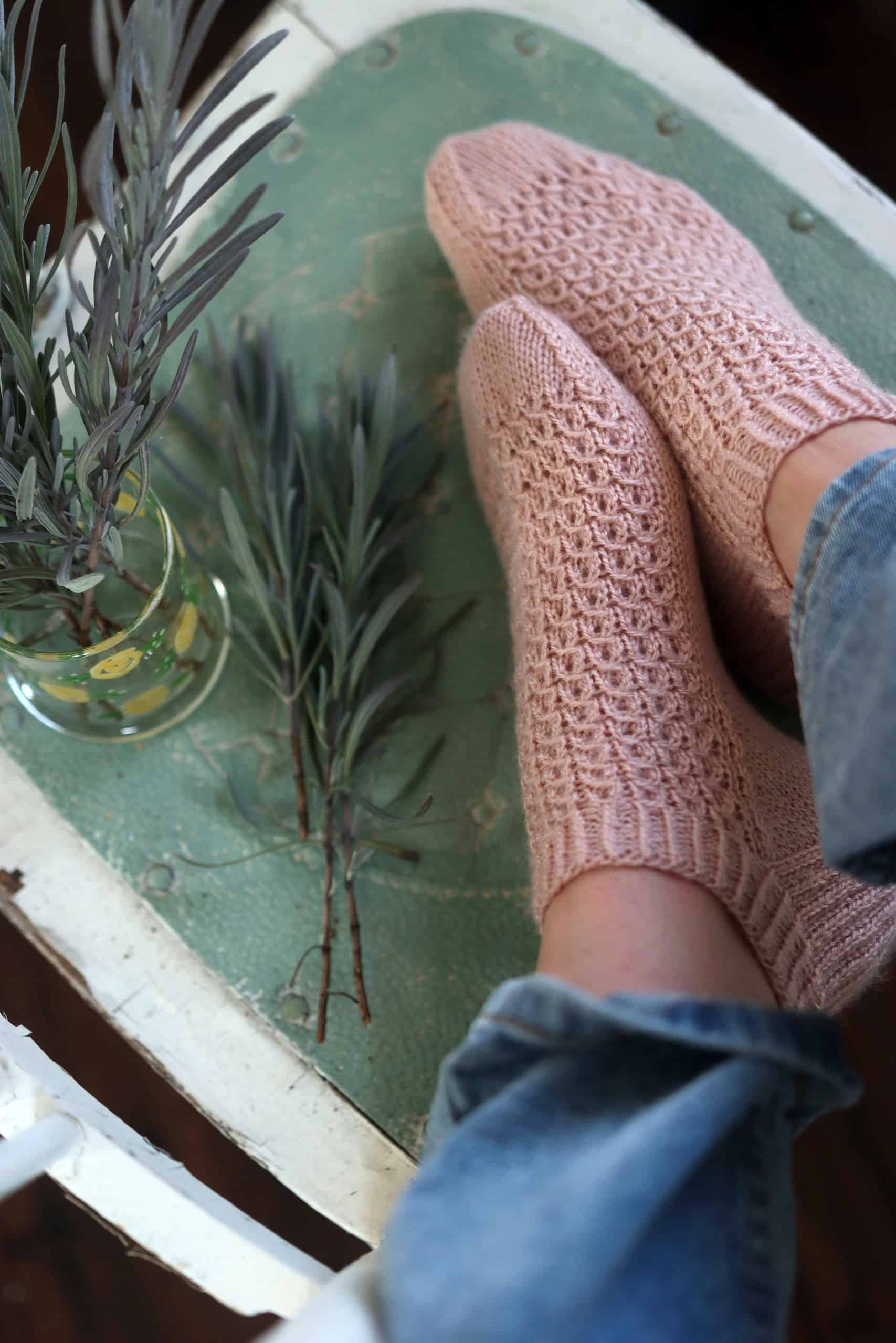
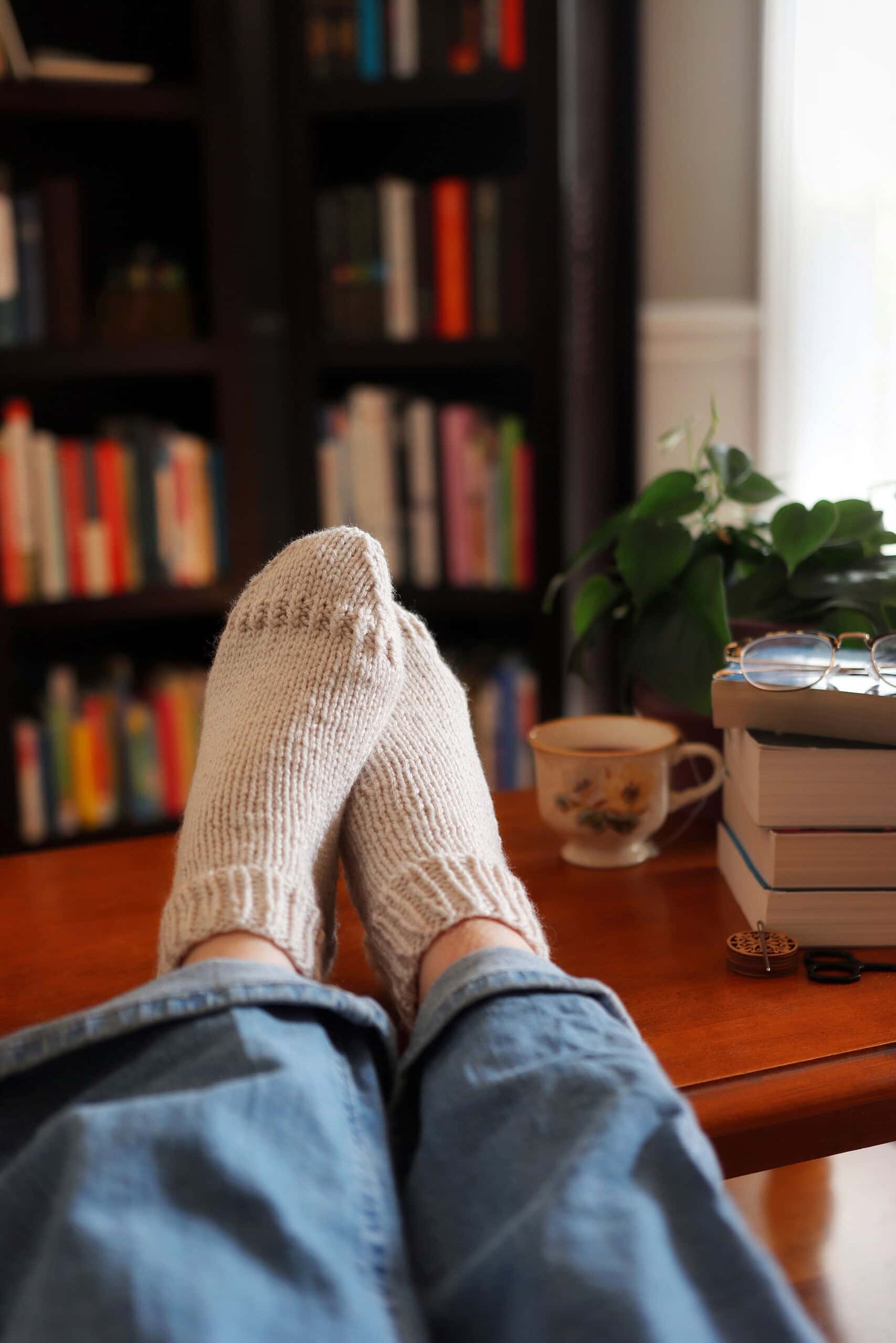
Texture is the dominant trend across all knitwear right now, and socks are no exception. Cables, ribbing, slip-stitch patterns, and knit/purl textures create visual interest and tactile richness. Gansey-inspired socks with traditional stitch patterns reimagined in modern colorways are especially popular.
Colorwork Socks
Fair Isle, stranded, and mosaic colorwork remain strong in sock design. Gradient colorwork has been called "the aesthetic of the knit scene in 2026." Mosaic knitting, which uses only one color per row to create striking two-color patterns, is gaining popularity as a simpler alternative to stranded colorwork. It is especially well-suited to socks because the fabric does not pucker the way stranded knitting sometimes can on small circumferences.
Vanilla Socks
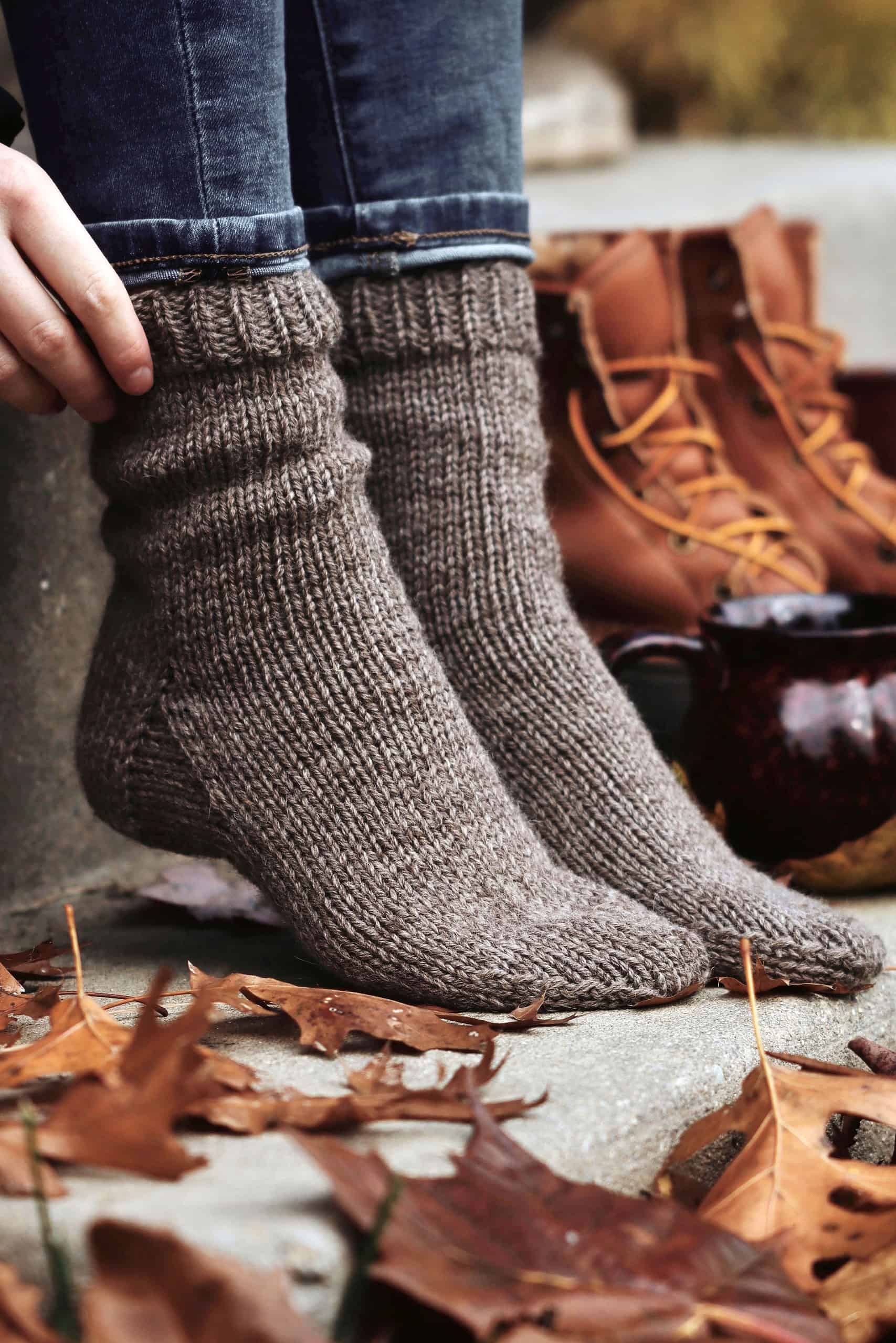
On the opposite end of the spectrum, "vanilla" socks (plain stockinette with no stitch pattern) remain a beloved staple. Vanilla socks are meditative to knit, let beautiful hand-dyed yarn shine, and serve as a canvas for learning new heel techniques without the distraction of a stitch pattern.
Ankle and Shorty Socks
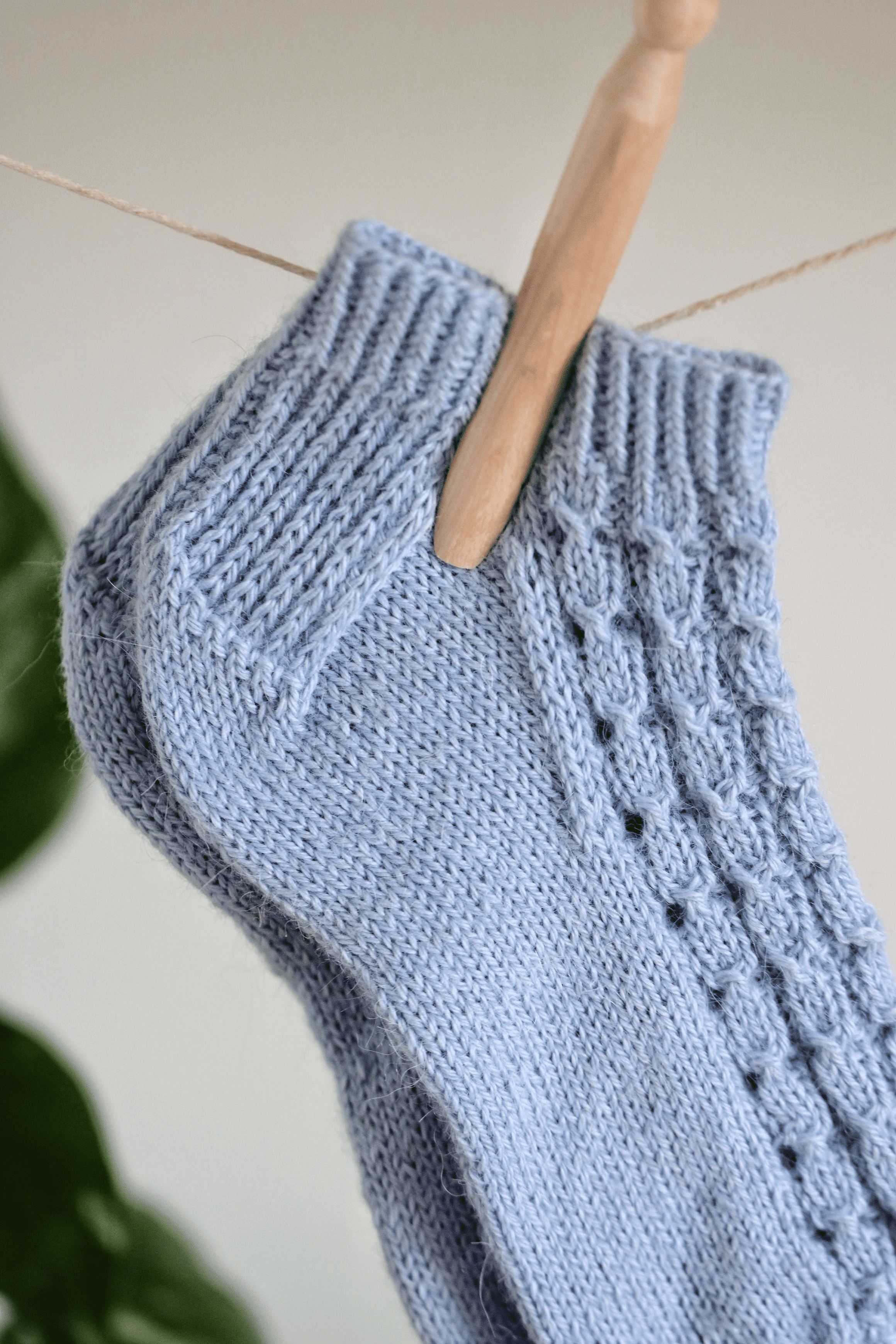
Short socks are popular for warm weather and for knitters who want a faster finish. Ankle-length socks use less yarn (often a single skein) and knit up in a fraction of the time of a full crew sock. My Blossom Socks Pattern is designed as a beautiful ankle sock.
Cozy House Socks
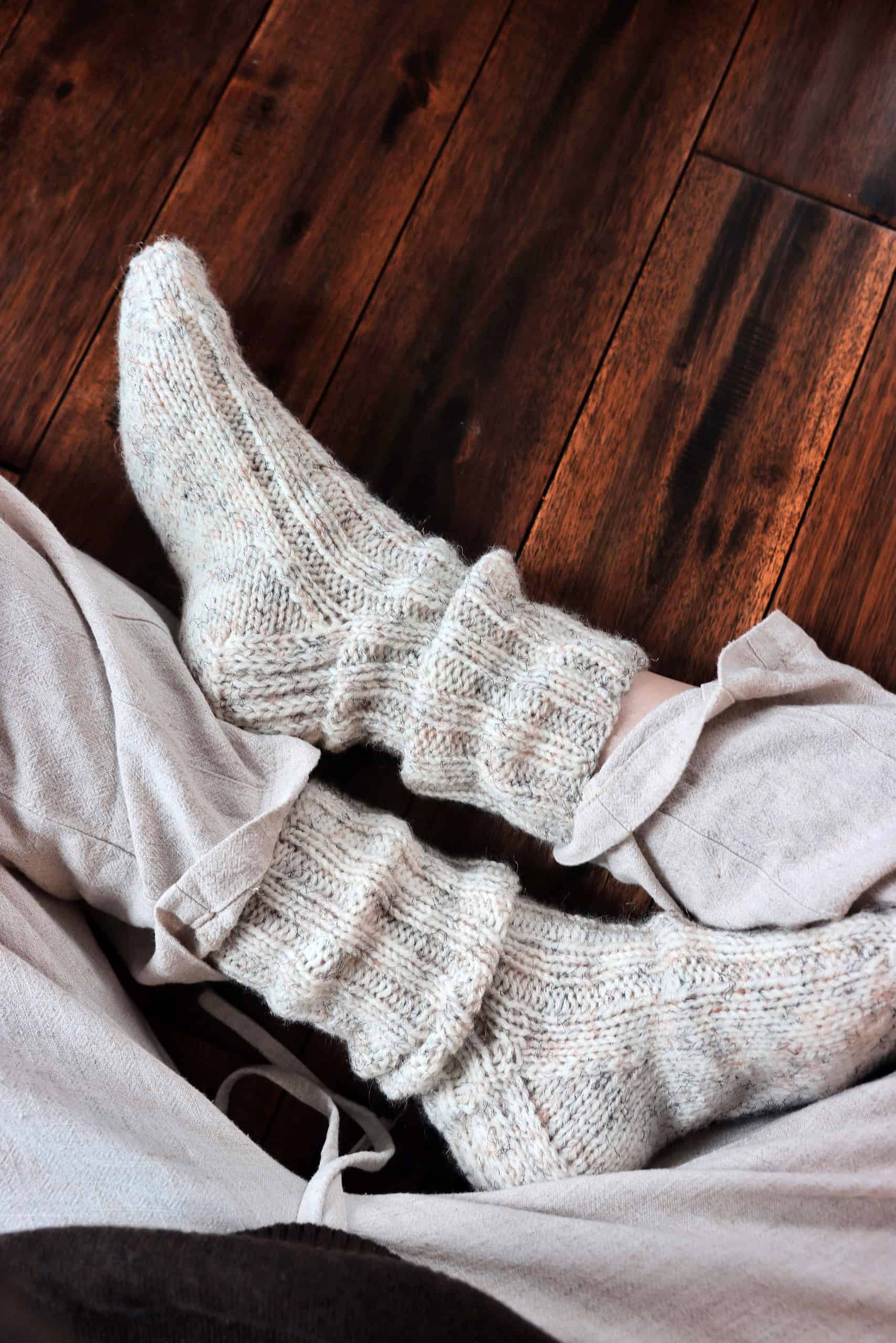
House socks and slipper socks knit in DK, worsted, or chunky weight are consistently popular, especially as gift knits. They knit up quickly, feel luxuriously cozy, and are the kind of handmade item that non-knitters genuinely appreciate receiving. If you are looking for a fast, satisfying sock project, house socks are hard to beat.

Knitted Sock Heel Techniques Explained
The heel is where sock knitting gets interesting. There are several techniques, and each produces a different fit and look. Here are the most popular.
Heel Flap and Gusset. The most traditional method. You work a rectangular flap back and forth, turn the heel with short rows, then pick up stitches along the flap edges to create a gusset. This produces a reinforced, well-fitting heel with excellent durability. It is the most commonly taught heel for beginners.
German Short Row Heel. One of the easiest heel techniques. You work short rows with double stitches (no wrapping), creating a smooth, curved heel with no holes and no picking up stitches. It works for both cuff-down and toe-up socks and is an excellent choice for your first pair.
Afterthought Heel. This technique lets you knit the entire sock as a simple tube, placing waste yarn where the heel will go. After the sock is finished, you go back and knit the heel into the opening. It is perfect for colorwork socks where you do not want to interrupt the pattern.

How to Knit Your First Pair of Socks
If you have never knit socks before, here is how to set yourself up for success.
Start with DK or worsted weight. Yes, most sock patterns use fingering weight. But for your very first pair, a heavier yarn on larger needles makes the stitches easier to see and the knitting faster. You will learn the construction without fighting tiny needles and thin yarn. Save fingering weight for your second pair, when the construction already makes sense. My Beginner Socks Pattern is designed specifically for this purpose.
Choose a vanilla (plain) pattern. Your first sock should be in stockinette. No cables, no colorwork, no lace. You want to focus entirely on understanding the construction without the distraction of a stitch pattern.
Use locking stitch markers generously. Mark the beginning of your round, mark where your heel starts, mark your gusset decreases. Markers prevent the kind of mistakes that make you want to throw the sock across the room.
Do not worry about Second Sock Syndrome. It is real: the phenomenon where you finish one sock and lose motivation to knit the second. If it happens, it happens. Some knitters solve this by knitting two at a time on one circular needle. Others just accept that the second sock might take a while. Either way, you still have one really nice sock.
Try on as you go. Sock fit is forgiving, but trying the sock on your foot as you knit helps you understand how the construction works and ensures a good fit. Check the heel turn, the foot length, and the toe before closing up.
How Much Yarn Do I Need To Knit Socks?
Yarn requirements depend on sock length, foot size, and yarn weight.
Fingering weight ankle socks: 200 to 300 yards per pair
Fingering weight crew socks: 350 to 450 yards per pair (one standard 100g/400yd skein is usually enough)
DK weight socks: 250 to 350 yards per pair
Worsted weight house/slipper socks: 200 to 300 yards per pair
Colorwork socks use more yarn than plain stockinette. If your pattern uses two colors throughout, plan for about 30 percent more total yardage. When in doubt, buy an extra skein.
Caring for Handknit Socks
Handknit socks are surprisingly durable when made with the right yarn and cared for properly.
Wash on gentle or hand wash. If your sock yarn is superwash, most socks can go in the washing machine on a gentle/delicate cycle in a mesh laundry bag. Use cool water. If you are unsure, hand wash in cool water with wool wash.
Never put handknit socks in the dryer. Even superwash wool can felt or shrink in the dryer. Lay flat to dry or use blocking mats. Sock blockers (shaped wire or wooden forms) are a nice luxury that help socks dry in shape.
Reinforce high-wear areas. Some knitters hold a strand of reinforcing thread (like sock-weight nylon) together with their yarn when knitting the heel and toe. This adds durability right where the sock gets the most wear. You can also darn worn spots with matching yarn to extend the life of your socks.
Frequently Asked Questions About Knit Sock Patterns
Are socks hard to knit?
Socks are not as hard as they look. If you can knit in the round, do basic increases and decreases, and follow a pattern, you can knit socks. The heel turn can feel confusing on your first pair, but it clicks after a few rows. Most knitters who try socks once become lifelong sock knitters. Start with a well-written beginner sock knitting pattern and take it one step at a time.
What is the easiest sock to knit?
The Beginner Socks knitting pattern is the easiest! Or any top-down vanilla sock in DK or worsted weight yarn is the easiest sock to knit. The heavier yarn makes stitches easy to see and count, the construction is well-documented, and a plain stockinette stitch pattern lets you focus entirely on learning the shaping. For an even simpler option, tube socks (no heel shaping at all) are the absolute easiest starting point.
What is the best sock yarn for beginners?
A superwash merino/nylon blend in a light, solid color is ideal. The superwash makes it machine washable, the nylon adds durability, and a light solid color makes it easier to see your stitches than a dark or variegated yarn. For a first pair, DK or worsted weight is less intimidating than fingering weight.
How long does it take to knit a pair of socks?
A pair of fingering-weight crew socks typically takes 20 to 40 hours, spread over a few weeks. DK or worsted weight socks are faster, often finishing in 10 to 20 hours. Ankle socks and shorties can be done in a weekend. Speed improves dramatically after your first few pairs as the construction becomes muscle memory.
What is Second Sock Syndrome?
Second Sock Syndrome (SSS) is the common experience of finishing one sock and losing motivation to knit the second. It happens because the challenge and novelty are gone after the first sock. The most popular solution is knitting two socks at a time on one long circular needle. Another approach is to alternate between socks after each section (finish the cuff of both, then the leg of both, and so on).
Can I knit socks on straight needles?
Yes, though it is less common. Socks can be knit flat on straight needles and seamed up the side. This is sometimes recommended for beginners who are not yet comfortable knitting in the round. However, the seam can feel uncomfortable inside a shoe, so most sock patterns are designed for circular knitting (DPNs, Magic Loop, or small circulars).
Sock knitting is one of those projects that changes how you think about knitting. It is small, portable, endlessly varied, and deeply satisfying. Whether you start with a cozy pair of house socks in chunky yarn or dive straight into fingering-weight stripes, you are in for a rewarding experience.
If you are ready to start, explore my Beginner Socks, Blossom Socks, and Cuddle Socks patterns, or browse my full collection of knitting patterns. Follow along on Instagram at @darlingjadore for new releases and works in progress.
Happy knitting.
Comments are closed.