

If you have been thinking about knitting your first sweater, or your fiftieth, there has never been a better time. The world of knit sweater patterns has expanded dramatically in recent years, with indie designers creating beautifully written, well-graded knitting patterns in every construction style imaginable. Whether you are drawn to the clean diagonal lines of a raglan or the seamless beauty of a circular yoke, the right sweater knitting pattern is waiting for you.
As a knitwear designer, I spend a lot of time studying what knitters are making, what yarns they are reaching for, and what construction methods give the best results. This guide breaks it all down so you can choose your next sweater project with confidence.
Key Takeaways
- Top-down construction (both raglan and yoke) dominates modern sweater knitting because it eliminates seaming and allows try-on-as-you-go fitting
- Raglan sweaters are one of the most beginner-friendly constructions, with clean diagonal lines and simple shaping
- DK and worsted weight yarns are the most popular for sweaters, offering the best balance of drape, stitch definition, and knitting speed
- Texture is the biggest trend in sweater design right now, with cables, brioche, and ribbing leading the way
- Mohair held double with a companion yarn continues to be one of the most popular fiber choices for cozy, modern sweaters
- Merino wool (especially superwash) remains the all-around best yarn for sweaters across all skill levels
- The best sweater pattern for you depends on your skill level, preferred construction, and what you want to wear when it is finished

Popular Sweater Constructions: Raglan, Yoke, and Beyond
The construction method is the backbone of every sweater knitting pattern. It determines how you build the garment, how it fits, and how much finishing work you will need to do at the end. Here are the main types you will encounter.
What Is a Raglan Sweater?
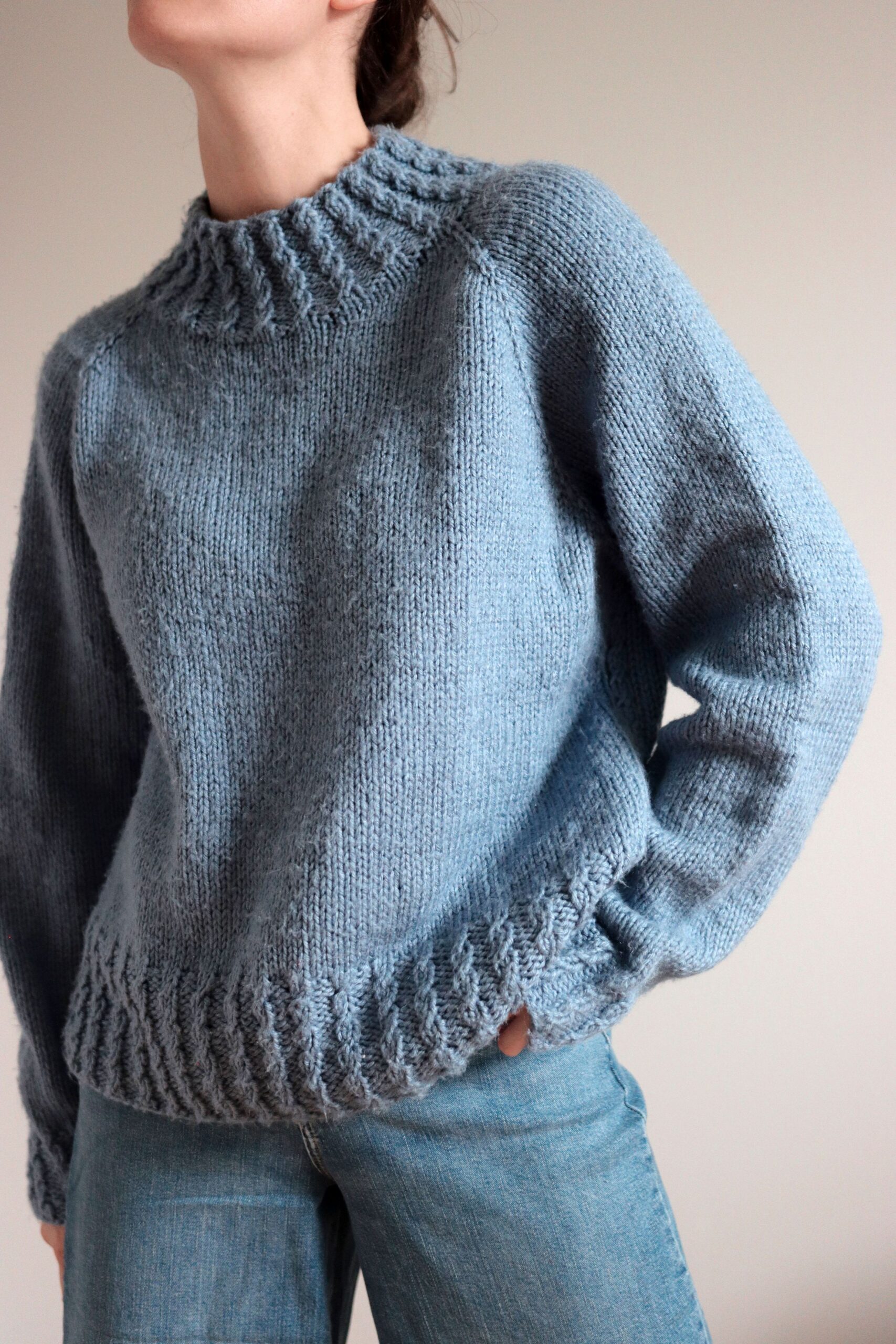
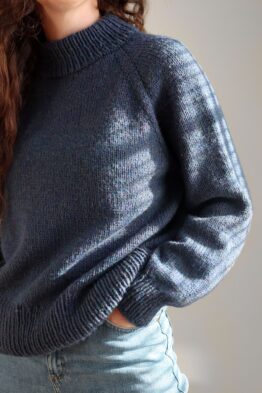
A raglan sweater is constructed with diagonal shaping lines that run from the neckline to the underarm. The body and sleeves are worked simultaneously, usually from the top down, with increases placed along four raglan lines every other round. This creates a distinctive diagonal seam that is both functional and decorative.
Raglan construction is one of the most popular approaches in modern knitting for good reason. It is intuitive, adjustable, and produces a reliably good fit. You can try your sweater on as you go, adjust the yoke depth for your body, and there is zero seaming at the end. If you are looking for your first sweater knitting pattern, raglan is an excellent place to start.
A newer variation called the compound raglan is gaining popularity among designers. It adds short rows or additional shaping after the standard raglan increases to fine-tune the fit around the bust and upper arm. This gives a more tailored result without sacrificing the simplicity of top-down construction. My Cafe Sweater Pattern uses raglan construction and is one of my most popular designs for exactly this reason.

Circular Yoke Sweaters
Circular yoke sweaters feature a round yoke worked in the round from the top down (or bottom up), with evenly distributed increases creating a smooth, curved shape from neck to underarm. This construction is ideal for colorwork, since the circular yoke becomes a canvas for Fair Isle, mosaic, or stranded patterns.
The difference between a raglan and a yoke sweater comes down to shaping: raglan uses four distinct increase lines, while a circular yoke distributes increases more evenly around the entire circumference. Both are excellent choices for seamless, top-down knitting.

Set-In Sleeves and Drop Shoulder
Set-in sleeve construction is making a comeback for 2026. It produces the most tailored, structured fit but requires more finishing work (seaming). Many designers are pairing it with European shoulder construction for a polished, modern look.
Drop shoulder has been the dominant silhouette for a decade, creating a relaxed, boxy fit. It is still popular, but the trend is shifting toward more intentional shaping. If you love the ease of a drop shoulder but want a more refined look, consider a saddle shoulder, an emerging construction where a strip of fabric extends from the neck across the top of the shoulder to meet the sleeve.

Img_2895
Best Yarn for Knitting a Sweater
Choosing the right yarn for your sweater is just as important as choosing the right pattern. The yarn determines how your finished sweater drapes, holds its shape, and feels against your skin. Here is what works best.
Yarn Weight
DK weight is the sweet spot for most sweaters. It is light enough to drape and layer comfortably, substantial enough to show stitch definition, and works up at a satisfying pace. Many of the most popular indie sweater patterns are written in DK.
Worsted weight is the classic American sweater yarn. It knits up faster than DK, creates a cozy, substantial fabric, and is the most widely available weight at yarn shops and craft stores. If you want a warm, quick-knitting sweater, worsted is hard to beat. Knit Picks Swish Worsted is a beautiful 100% superwash merino option that is soft and easy to care for.
Fingering weight is popular for lightweight layering pieces and summer tops. It takes longer to knit but produces a refined, drapey fabric. My Classic Tee Pattern works beautifully in fingering weight for a lightweight everyday top.
Fiber
Merino wool remains the gold standard for sweaters. It is soft, elastic, holds its shape well, and is available in every weight. Superwash merino adds machine-washability, which is a huge practical advantage for garments you will wear often.
Mohair held double is one of the biggest yarn trends in sweater knitting right now. Holding a strand of brushed mohair or kid mohair/silk together with a companion yarn (usually fingering weight) creates a fabric with incredible warmth, a beautiful halo effect, and rich depth of color. It photographs gorgeously, too.
Alpaca is trending for oversized, relaxed-fit sweaters. It is incredibly insulating and has a luxurious drape. Alpaca blends (alpaca/merino, alpaca/silk) give you the best of both worlds.
For spring and summer sweaters, cotton, linen, and cotton/linen blends are the way to go. CotLin DK from Knit Picks is a beautiful cotton/linen blend that creates a breathable, lightweight fabric with just enough structure.

Trending Sweater Styles and Design Details for 2026
The world of knit sweater patterns is always evolving. Here is what is trending right now and what is worth considering for your next project.
Texture Is the New Print
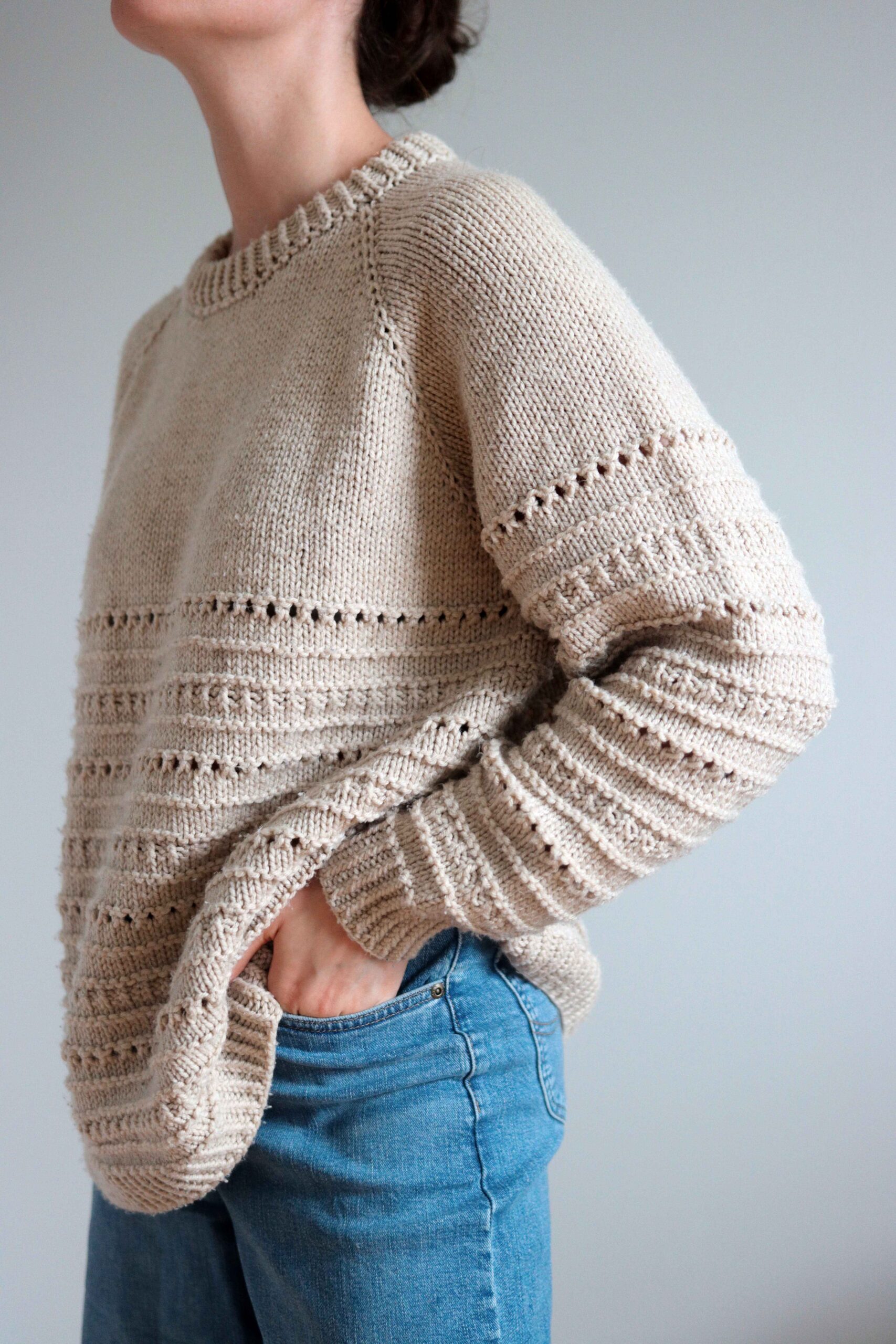
If there is one trend defining sweater knitting in 2026, it is texture. Cables, brioche, bobbles, seed stitch, and sculptural stitch patterns are everywhere. The modern approach is not to cover every inch of the sweater in cables, but to use texture strategically: a single cable panel down the front, a textured yoke, or an all-over ribbing that creates beautiful drape.
Flat cables and faux cables are especially popular right now. These are graphic, modern interpretations of traditional cables that create visual interest without bulk. They pair perfectly with the minimalist aesthetic that dominates indie knitwear.
Vertical stitch patterns are also having a moment for spring and summer, with cables, lace columns, or narrow strips of texture running from neck to hem for a long, flattering line.
Colorwork and Stripes
Fair Isle, mosaic, and stranded colorwork remain strong in sweater design. The trend is leaning toward bold, contemporary palettes rather than traditional muted tones. Argyle and diamond patterns are experiencing a full comeback, with designers like Khaite and Celine putting them on recent runways.
Stripes are trending for 2026, including colorful stripes on neutral backgrounds and gradient colorwork. Mosaic and slip-stitch colorwork offer a simpler alternative to stranded knitting while still creating striking two-color effects.
Silhouette and Fit
Oversized sweaters are still popular, but the shape is becoming more intentional. Think relaxed fits with thoughtful details rather than shapeless boxy rectangles. Plush yarns, longer hemlines, and subtle waist shaping keep the oversized look modern.
Fitted silhouettes are making a quiet comeback. Sculptural elements like exaggerated shoulders, corset-like ribbing, and body-skimming fits are appearing in new patterns. If you have been knitting nothing but oversized for the past five years, a fitted sweater might be a refreshing change.
Vests and slipovers continue to be hugely popular. They knit up faster than a full sweater, work as layering pieces year-round, and are a great intermediate step if you are not ready to tackle sleeves yet.
How Much Yarn Do I Need for a Sweater?
This is one of the most common questions I get, and the answer depends on yarn weight, sweater size, and design complexity. Here are general guidelines to help you plan.
Fingering weight: 600 to 700 yards for a small, 800 to 1,200 yards for medium through large sizes.
DK weight: 500 to 600 yards for a small, 700 to 1,000 yards for medium through large.
Worsted weight: 450 to 550 yards for a small, 600 to 800 yards for medium, 900 to 1,200 yards for large and above.
Bulky weight: 550 to 650 yards for a small, 700 to 1,000 yards for larger sizes.
Cardigans typically need 10 to 15 percent more yarn than pullovers. Heavily textured patterns (cables, brioche) can require 400 to 600 extra yards compared to stockinette. Always buy an extra skein just in case, especially if you are working with hand-dyed or indie-dyed yarn where dye lots vary.
Easy Sweater Knitting Patterns for Beginners
If you are about to knit your first sweater, here is what to look for in a beginner-friendly sweater knitting pattern.
Choose top-down raglan construction. It is the most forgiving for beginners because you can try the sweater on as you knit, there is no seaming, and the shaping is straightforward. You increase on every other round along four raglan lines, and that is essentially it.
Start with worsted or DK weight yarn. Thicker yarns knit up faster and give you a sense of accomplishment sooner. Fingering weight sweaters are beautiful but can feel endless for a first project. A good superwash merino in worsted weight is ideal.
Pick a simple stitch pattern. Stockinette with ribbed edges is perfect for a first sweater. You can always add cables and texture to your second sweater once you are comfortable with the construction.
Use circular needles. Even if a pattern says "knit flat," circular needles are more comfortable for sweater knitting because they distribute the weight of the fabric across the cable instead of loading it onto two straight needle tips.
Do not skip the gauge swatch. I know, I know. Nobody wants to swatch. But with a sweater, gauge determines whether your finished garment fits or whether it ends up three sizes too big. Swatch, wash, and measure. It is worth the twenty minutes.
If you are looking for patterns from my shop, the Cafe Sweater is a top-down raglan designed to be approachable for confident beginners. Browse all of my knitting patterns here.

Tips from a Knitwear Designer
After designing dozens of sweater patterns and hearing feedback from thousands of knitters, here are a few things I have learned.
Read the entire pattern before you start. Not just the first section. Understanding the full construction sequence before you cast on prevents surprises and helps you anticipate what is coming.
Use locking stitch markers generously. Mark your raglan lines, mark your stitch pattern repeats, mark where you started a round. Markers are cheap. Frogging six inches of work because you lost count is expensive.
Try the sweater on frequently. This is the beauty of top-down construction. Every few inches, slip your stitches onto waste yarn and try it on. Check the yoke depth, the bust circumference, the sleeve length. Adjusting as you go is much easier than fixing after binding off.
Block your finished sweater. Blocking transforms a lumpy, curly piece of knitting into a polished garment. For most wool sweaters, soak in lukewarm water with a drop of wool wash, gently squeeze out the water (never wring), and lay flat to dry on blocking mats. The difference is dramatic.
Size inclusivity matters. When choosing a pattern, look for one that offers a wide range of sizes. The current industry standard is moving toward 28 to 60 inches or more at the bust, graded at consistent 4-inch intervals. Patterns with extended sizing serve more knitters and are designed with intentional shaping across the full size range.

Img_2807
Frequently Asked Questions About Knit Sweater Patterns
What is the easiest sweater to knit?
A top-down raglan pullover in worsted or DK weight yarn is the easiest sweater construction for most knitters. There is no seaming, the shaping is repetitive and predictable, and you can try it on as you go. Look for a pattern in stockinette with ribbed edges to keep the stitch work simple while you focus on learning the construction.
What is the difference between a raglan and a yoke sweater?
Both are worked from the top down, but they shape differently. A raglan has four distinct diagonal increase lines running from the neckline to the underarm, creating visible raglan seams. A circular yoke distributes increases evenly around the entire circumference, creating a smooth, round yoke with no visible shaping lines. Raglan tends to give a closer fit at the shoulder, while yoke construction offers more room for decorative colorwork.
How long does it take to knit a sweater?
Most knitters take 40 to 60 hours to complete a sweater, spread over several weeks or months. A chunky weight sweater can be finished in 20 to 30 hours. A fingering weight sweater with colorwork could take 80 hours or more. The actual time depends on your speed, the yarn weight, the pattern complexity, and how much time you have to knit each day.
Can I knit a sweater as a beginner?
Absolutely. If you can knit, purl, and follow a pattern, you can knit a sweater. A top-down raglan in worsted weight is essentially knitting in the round with increases every other row. It is not harder than knitting a hat, just bigger. Choose a well-written pattern with clear instructions and take it one section at a time.
What is the best yarn for a first sweater?
Superwash merino in worsted weight is ideal for a first sweater. It is soft, forgiving (it stretches to accommodate minor gauge issues), machine washable, and widely available. Avoid cotton for a first sweater because it has no elasticity and tends to stretch out. Avoid very dark or very light colors because they make it harder to see your stitches.
Do I really need to swatch for a sweater?
Yes. A sweater uses hundreds of yards of yarn and dozens of hours of your time. If your gauge is off by even half a stitch per inch, a size medium could come out as a size small or a size large. Swatch in the round (since gauge differs between flat and circular knitting), wash your swatch the way you would wash the finished sweater, and then measure. It takes twenty minutes and saves you from heartbreak.
Knitting a sweater is one of the most rewarding projects you can take on. There is nothing quite like wearing something you made with your own hands, stitch by stitch. Whether you are casting on your very first raglan or exploring advanced cables and colorwork, the right knit sweater pattern makes all the difference.
If you are looking for well-written, thoughtfully designed patterns, browse my full collection of knitting patterns or follow along on Instagram at @darlingjadore for works in progress, styling inspiration, and new pattern releases.
Happy knitting.
Comments are closed.