

Knit and crochet scarves are having a serious moment. Whether you have been scrolling past triangle scarves on Instagram, admiring skinny tassel scarves on the runway, or simply looking for a fast, satisfying knit scarf pattern to cast on this weekend, the options have never been more exciting. The scarf is no longer just a cold-weather staple. It has become a year-round styling accessory, and the knitting pattern world has responded with fresh silhouettes, modern textures, and designs that feel current without sacrificing timelessness.
As a knitwear designer, I have been paying close attention to what is trending in the scarf space, from fashion week runways to Ravelry's most popular patterns to what indie designers are releasing. This guide covers everything you need to know to choose your next scarf knitting pattern, pick the right yarn, and knit something you will actually reach for every day.

Key Takeaways: Knit & Crochet Scarf Patterns
- Triangle scarves and bandana scarves are the hottest scarf silhouette in knitting right now, driven by celebrity adoption and indie pattern popularity
- Skinny scarves with tassels are the most runway-validated scarf trend for 2026, appearing at Chanel, Bottega Veneta, and Miu Miu
- DK weight yarn is the most popular choice for knit scarves, balancing drape, warmth, and knitting speed
- Cashmere and alpaca blends elevate even the simplest scarf pattern into something that looks and feels luxurious
- Texture is everything right now. Ribbing, seed stitch, and flat cables make a simple scarf feel designed, not basic
- The best scarf patterns offer multiple sizes (bandana, scarf, and shawl) in a single PDF for maximum versatility
- A well-chosen scarf pattern is the perfect beginner knitting project and the ideal quick gift knit for experienced makers

Scarf Silhouettes: What Is Trending Right Now
Not all scarves are created equal. The silhouette you choose determines how the finished piece looks, how you wear it, and how long it takes to knit. Here are the shapes dominating the knitting pattern world right now.
The Triangle Scarf
The knit triangle scarf has exploded in popularity. Multiple fashion publications have called it the "first micro-trend of 2026," and the numbers back it up. You can check out my small triangle scarf patterns here.
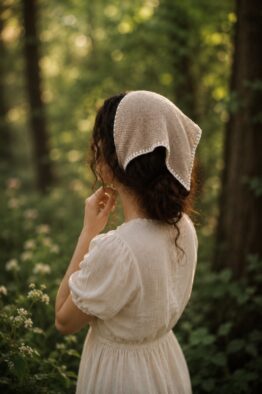
What makes triangle scarves so appealing is their versatility. Worn point-down at the front of the neck and tied at the back, they sit like a cozy neckerchief that adds polish to any outfit. They layer beautifully under coats, over sweaters, and with blazers. The knit bandana scarf variation is slightly smaller, sitting closer to the neck like a fashion accessory rather than a traditional warmth layer. My Air Scarf Pattern is designed in this spirit: simple, wearable, and elevated by thoughtful details.
The Skinny Scarf
Narrow, elongated, and effortlessly cool, the skinny scarf is the most runway-validated scarf shape for 2026. At just 2 to 4 inches wide and 60 to 80 inches long, it functions more like a wearable accessory than a warmth piece. Skinny scarves appeared across multiple fashion weeks, from Chanel to Bottega Veneta, often finished with chunky handmade tassels.
For knitters, skinny scarves are a dream project. They knit up fast, use minimal yarn (often a single skein), and make striking gifts. The key to making a skinny scarf feel intentional rather than unfinished is the finishing: tassels, fringe, or i-cord edges transform a strip of knitting into a polished accessory.
The Classic Rectangular Scarf
The 8 to 12 inch wide rectangular scarf will never go out of style. It is the workhorse of the scarf world: practical, warm, endlessly wearable. What keeps it fresh right now is texture. A simple rectangle in stockinette feels basic, but add a flat cable panel, an all-over seed stitch, or deep fisherman's rib, and suddenly you have a modern, elevated piece.
If you are looking for a reliable scarf knitting pattern that will get worn for years, a well-textured rectangle is hard to beat.
Shawls and Oversized Wraps
On the larger end of the spectrum, shawl knitting patterns and oversized wraps offer maximum coziness and dramatic draping. These appeared on runways at NYFW in shroud-like proportions, draped asymmetrically like a soft outerwear piece. For knitters, larger shawls and wraps are satisfying long-term projects that showcase beautiful yarns and complex stitch patterns.
The current trend is toward intentional proportions. Either go small (bandana/triangle) or go generous (blanket scarf/wrap). The mid-size default scarf needs a clear design reason to stand out.

Best Yarn for Knitting a Scarf
The yarn you choose transforms a scarf from a simple accessory into something you reach for every single day. Here is what works best for different scarf styles.
Yarn Weight
DK weight is the most popular choice for knit scarves right now. It creates a fabric that drapes beautifully without being too heavy, shows stitch definition clearly, and knits up at a satisfying pace.
Worsted weight is excellent for warm, cozy scarves that knit up quickly. It is the most widely available weight at craft stores and produces a substantial fabric that holds its shape well. Knit Picks Swish Worsted is a beautiful 100% superwash merino that works perfectly for scarves.
Fingering weight creates lightweight, refined scarves that work across seasons. A fingering-weight triangle scarf in merino or silk blend can be worn from early fall through spring. It takes longer to knit but produces an elegant, drapey fabric.
Avoid super bulky for trend-forward scarves. The chunky knit aesthetic has moved firmly into "dated" territory for scarves. Lighter weights create a more refined, modern look that aligns with the current direction in knitwear.
Fiber
Merino wool is the all-around best choice. Soft, elastic, warm, and available everywhere. Superwash merino adds machine washability, which matters for an accessory you will wear constantly.
Cashmere and cashmere blends are the luxury standard for scarves. Every major brand driving the triangle scarf trend (The Row, Toteme, Kujten) uses cashmere. Even a small percentage of cashmere in a blend (like merino/cashmere) makes the fabric noticeably softer against the neck.
Alpaca is rising as the accessible luxury alternative. Incredibly warm, beautifully drapey, and available in stunning natural colors. Alpaca blends are especially good for oversized wraps and shawls.
Mohair held double creates a dreamy, hazy fabric that is incredibly photogenic. Holding a strand of kid mohair/silk together with a fingering-weight base yarn produces a light, warm scarf with a beautiful halo effect. This is one of the strongest fiber trends in knitting right now.
For spring and summer scarves, cotton and linen blends create breathable, lightweight accessories. CotLin DK from Knit Picks is a cotton/linen blend that works beautifully for warm-weather scarves and bandanas.

Trending Colors for Knit & Crochet Scarves
Color choice can make or break a scarf. Here is what the color forecasts say for fall/winter 2026-2027 and what actually sells.
Rich browns and warm neutrals are the strongest commercial bet. Chocolate, espresso, camel, and oatmeal work with everything and feel timeless. Brown has replaced grey as the dominant neutral in knitwear and shows no sign of fading.
Warm cream and off-white is always a winner. Not bright white, but ivory, ecru, and parchment. Cream scarves photograph beautifully, pair with every outfit, and feel effortlessly elevated, especially in cashmere or alpaca.
Berry and plum tones are emerging as the new burgundy. Foxglove, mulberry, wine, and dried rose feel rich and feminine without being pastel.
Warm spiced tones like cinnamon, paprika, and terracotta perform well on social media (warm tones get strong engagement) and feel current without being trendy.

Design Details That Make a Scarf Stand Out
With thousands of knit scarf patterns available, the right design detail is what separates a pattern that sells from one that gets lost. Here is what is working right now.
Tassels and fringe. The single most runway-validated scarf detail for 2026. Chunky, handmade tassels (even crochet tassels on a knit scarf) were seen at Chanel, Etro, and multiple other houses. They add visual weight, movement, and a strong social media hook to even the simplest pattern.
I-cord edges. Clean, polished rolled edges that replace traditional cast-on and bind-off. My Villa Scarf knitting pattern incorporates this technique.
Contrasting borders. A stripe of contrasting color at the edge of a triangle scarf or along the ends of a rectangular scarf. It adds visual interest with minimal extra complexity.
Textured stitch patterns. Seed stitch, moss stitch, double seed stitch, and broken rib all create fabrics that lie flat without curling (solving the #1 complaint about stockinette scarves) while adding subtle visual texture.
Flat cables and traveling stitches. The modern reinterpretation of cables: less three-dimensional, more graphic. A single line of twisted stitches traveling across stockinette creates a design signature without overwhelming the piece. This is the dominant texture trend in knitwear and translates perfectly to scarves.

How to Choose the Right Scarf Pattern for Your Skill Level
Scarves are one of the best projects in knitting because they scale perfectly with your skill level. Here is what to look for.
Beginner
If you are new to knitting, a scarf is the ideal first project. Look for a beginner scarf knitting pattern in garter stitch or stockinette, worked flat in worsted or DK weight. Triangle scarves worked from the center out are especially beginner-friendly because you start with just a few stitches and grow from there, so the first rows go quickly and you build confidence before the piece gets wider.
Good needles make a difference. ChiaoGoo Red Lace circular needles are my go-to for scarves. Even when knitting flat, the cable lets you spread out the stitches comfortably.
Intermediate
Once you are comfortable with knit, purl, increases, and decreases, the scarf world opens up. Try a textured triangle scarf with a lace or cable element, a reversible double-knit bandana, or a rectangular scarf with an all-over rib or moss stitch pattern. This is also a great level to experiment with holding mohair double.
Advanced
Advanced knitters might enjoy a double-knit reversible scarf with a two-color geometric motif, a complex lace shawl, or an intricate cable pattern. These projects take longer but produce heirloom-quality pieces.
Browse my full collection of knitting patterns for scarves and accessories at every skill level.

How Much Yarn Do I Need to Knit or Crochet a Scarf?
Yarn requirements vary by scarf size and yarn weight. Here are general guidelines.
Bandana / small triangle scarf: 150 to 250 yards in DK weight (usually 1 skein)
Medium triangle scarf: 250 to 400 yards in DK weight (1 to 2 skeins)
Skinny scarf: 100 to 200 yards in DK weight (1 skein)
Standard rectangular scarf (8" x 60"): 300 to 500 yards in DK weight (2 to 3 skeins)
Oversized wrap / large shawl: 500 to 800+ yards in DK weight (3 to 5 skeins)
Textured stitch patterns (cables, seed stitch) use about 10 to 15 percent more yarn than stockinette. If you are using a pattern, always follow the pattern's yardage requirements rather than these estimates.

Knit and Crochet Scarf Construction Methods
Understanding how a scarf is constructed helps you choose the right knitting pattern for your preferences.
Center-out triangle: Start at the center spine with a few stitches and increase at each edge. This is ideal when you have limited yarn because you can grow the triangle until you run out.
Top-down triangle: Start with the full width and decrease to the point. Better when you have ample yarn and want a specific finished size.
Tip-to-tip: Start at one wing tip, increase to the center, then decrease to the other tip. Creates a scarf-like triangle shape that is more elongated than a center-out version.
Flat rectangle: Cast on the width, knit to the desired length. The simplest construction. Perfect for showcasing a stitch pattern like cables or lace.
Tubular / knit in the round: Worked as a tube, creating a double-layered scarf with no wrong side and no curling. Excellent for skinny scarves.
Reversible double-knit: Two layers knit simultaneously, creating a scarf that looks finished on both sides. Can incorporate two-color motifs. More advanced but produces a stunning result.

Caring for Your Handknit Scarf
A handknit scarf is an investment of time, skill, and beautiful yarn. Proper care keeps it looking new for years.
Wash gently. Hand wash in cool water with a wool-specific wash. Never wring. Gently press out water between towels and lay flat to dry on blocking mats.
Block after the first wash. Blocking opens up lace patterns, evens out stitches, and gives your scarf its final polished shape. Pin to measurements and let dry completely.
Store folded, not hung. Hanging a knit scarf stretches it out over time. Fold loosely and store in a drawer or basket. Add a cedar block or lavender sachet to keep moths away from wool and cashmere.

Frequently Asked Questions About Knit Scarf Patterns
What is the easiest scarf to knit?
A garter stitch rectangle in worsted weight yarn is the simplest scarf to knit. You only need to know the knit stitch. For something slightly more interesting, a center-out triangle scarf in garter stitch is nearly as easy and produces a more modern shape. Both are excellent beginner knitting patterns.
What is a triangle scarf?
A triangle scarf is a triangular piece of knitting worn around the neck with the point facing down at the front, tied or knotted at the back. It sits like a neckerchief or bandana. Triangle scarves can be small (bandana size, about 22 to 28 inches wide) or large (shawl size, 45 inches or wider). They are one of the most popular scarf shapes in knitting right now.
What is the difference between a scarf and a shawl?
The main difference is size and how you wear it. A scarf wraps around the neck. A shawl is larger and drapes over the shoulders, sometimes covering the upper back. Many knitting patterns blur this line by offering multiple sizes in a single pattern: a small bandana, a medium scarf, and a large shawl, all using the same construction.
How long does it take to knit a scarf?
A small triangle scarf or bandana in DK weight takes about 4 to 8 hours. A standard rectangular scarf takes 10 to 20 hours. A large shawl or oversized wrap can take 30 to 50 hours. Skinny scarves are the fastest, often finishing in 3 to 5 hours, making them ideal weekend projects.
What is the best yarn for a scarf?
For warmth and softness, merino wool or a merino/cashmere blend in DK weight is the best all-around choice. For luxury, pure cashmere or alpaca. For spring and summer, a cotton or cotton/linen blend. Avoid scratchy wools for scarves since the fabric sits directly against your neck.
Do I need to block a scarf?
Yes, especially for triangle scarves and anything with lace or texture. Blocking evens out your stitches, opens up lace patterns, and gives the scarf its final shape. For garter stitch scarves, a gentle steam block is usually sufficient. For lace shawls, wet blocking with pins is essential.
Whether you are drawn to the petite charm of a knit bandana scarf, the modern edge of a skinny tassel scarf, or the timeless warmth of a textured rectangular wrap, there is a knit scarf pattern waiting for you. Scarves are one of the most rewarding projects in knitting: fast enough to finish, beautiful enough to gift, and wearable enough to keep for yourself.
Explore my collection of knitting patterns including the Air Scarf, or follow along on Instagram at @darlingjadore for new pattern releases, styling ideas, and works in progress.
Happy knitting.
Comments are closed.